
Phê Vé
March 31, 2026 • 3 min read
Picture yourself sitting at a street food stall in the heart of Hanoi, the aroma of lemongrass and grilled meat wafting through the air. Suddenly, someone calls out, "Xin chào, bạn khỏe không?" (Hello, how are you?). You might not understand what they’re saying, but your curiosity is piqued. Thus be
Is Learning Vietnamese as Hard as You Think?
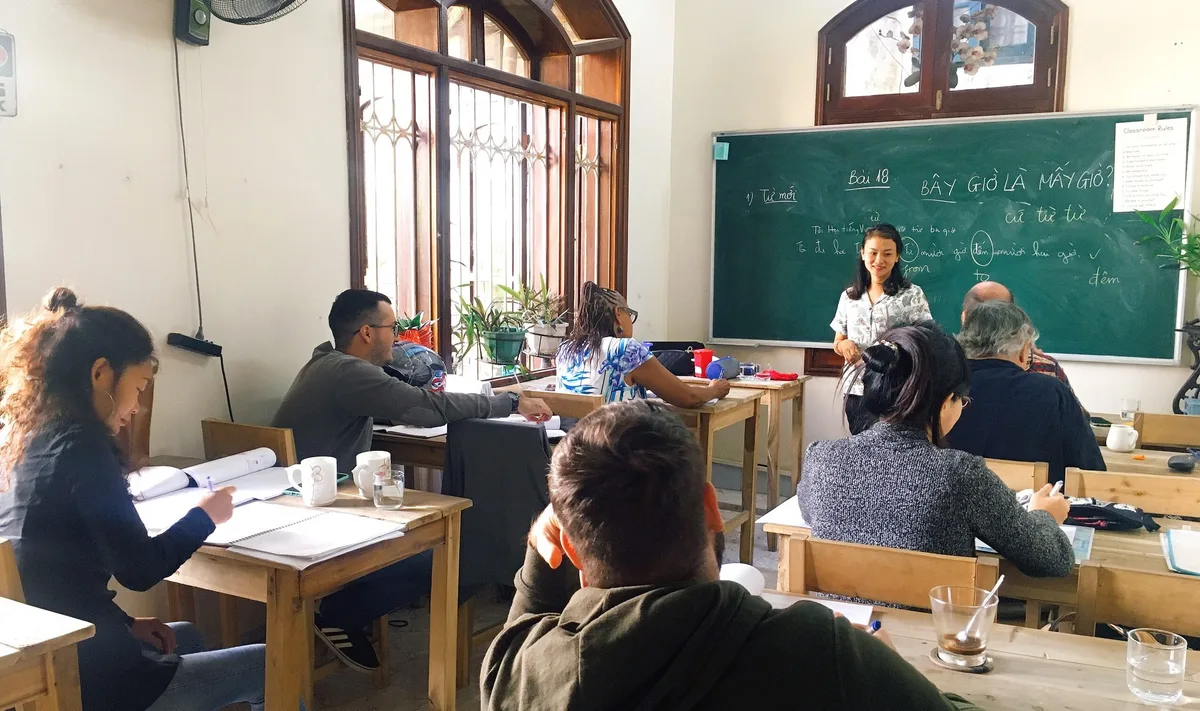
Picture yourself sitting at a street food stall in the heart of Hanoi, the aroma of lemongrass and grilled meat wafting through the air. Suddenly, someone calls out, "Xin chào, bạn khỏe không?" (Hello, how are you?). You might not understand what they’re saying, but your curiosity is piqued. Thus begins your journey into learning Vietnamese—a wild yet exciting adventure that is absolutely achievable!
Why is Learning Vietnamese Important?
Sure, you can get by with just saying "xin chào" and "cảm ơn" (thank you) in Vietnam. But knowing Vietnamese truly opens up a world of possibilities: deeper connections, easier ordering of food, and a much richer experience overall. Learning the language is not just about traveling; it’s your gateway into the culture.
People’s faces light up when they hear you greet them in Vietnamese. Walking through the maze-like streets of Hanoi or the alleys of Hoi An becomes so much more enjoyable when you have a few basic Vietnamese phrases up your sleeve.
Pronunciation, Tones, and the Alphabet
As you start learning Vietnamese, you’ll encounter the Latin alphabet adorned with various diacritics. Many find this alphabet to be a form of art, but don’t stress about spelling just yet—focus on the sounds first.
Vietnamese is a tonal language, meaning that the same word can have different meanings depending on how you pronounce it. For example, "ma" can mean "ghost," "mother," "but," "tomb," "rice seedling," or "to be" depending on the tone. Don’t let this intimidate you—just mastering the basic tones (flat, rising, falling) will set you on the path to success 80% of the time.
✈️ Tìm chuyến bay giá tốt
Đặt vé ngay với giá ưu đãi từ các hãng hàng không
Essential Vietnamese Phrases
Equip yourself with some everyday phrases. Here are a few you should definitely know:
- Xin chào - "sin chow"
- Cảm ơn - "gahm uhn"
- Xin lỗi - "sin loy"
- Bao nhiêu? - "bao nyeu?" (How much?)
- Ngon - "ngon" (Delicious)
- Tạm biệt - "tam bee-et" (Goodbye)
Try practicing these phrases; you’ll feel more confident in no time!
Strategies and Tools for Learning Vietnamese
Practicing in real-life situations is the best way to learn. Whenever you travel, strike up a conversation with locals. They’ll smile, correct your mistakes, and you’ll learn more in an afternoon than you could in a week using an app.
Utilize technology like Anki or Memrise for vocabulary through spaced repetition. Google Translate can also be a lifesaver in practical situations.
Common Mistakes and How to Avoid Them
Don’t just focus on travel-related phrases like food names or directions. You should also learn social phrases, greetings, and simple conversation starters. Don’t be afraid to make mistakes; be bold, attempt to speak, correct yourself, and laugh about it. That’s the fastest way to learn.
Why I Recommend Learning Vietnamese
The reason I encourage friends to learn Vietnamese isn’t just because it’s “useful,” but because when you try—even imperfectly—you get closer to the world of the locals. The moment someone smiles and responds to you in Vietnamese, you’ve just crossed a bridge. So, why not open up a notebook, practice saying "Xin chào" with enthusiasm, nail that tone for "Cảm ơn," and embark on your own exploration?
Phê Vé
Phê Vé is a leading online flight booking platform in Vietnam, providing accurate and up-to-date travel information. We are committed to delivering wonderful travel experiences with the best prices on the market.