Phê Vé
April 1, 2026 • 3 min read
The people and businesses in Saskatchewan have deep-rooted stories to tell. To celebrate Nutrien's 65 years of potash production, I embarked on a journey tracing the path of food from the potash mines to crop breeding facilities. Nutrien's work not only impacts my personal life but also resonates th
```html
Discovering Life Underground with Nutrien in Saskatchewan
The people and businesses in Saskatchewan have deep-rooted stories to tell. To celebrate Nutrien's 65 years of potash production, I embarked on a journey tracing the path of food from the potash mines to crop breeding facilities. Nutrien's work not only impacts my personal life but also resonates throughout the community, the country, and the world.
Learning About Crop Breeding
My father has been a grain farmer in Saskatchewan for 50 years. I grew up surrounded by tales of planting and harvesting crops that feed the global population. I have a profound appreciation for the effort, dedication, knowledge, and creativity it takes to balance sustainability with increasing food production.
During my visit to Nutrien's canola breeding facility in Saskatoon, I learned a great deal about the process of developing high-yield crop varieties. Zoe Ehlert, the facility manager, shared fascinating insights about plant genetics, DNA analysis, and hybridization techniques.
What surprised me the most was learning that breeders have to anticipate challenges that could arise up to ten years in the future. This is no easy task, as the crops must withstand unpredictable weather events, changing soil health, and maintain disease resistance while thriving.
✈️ Tìm chuyến bay giá tốt
Đặt vé ngay với giá ưu đãi từ các hãng hàng không
Life Below Ground
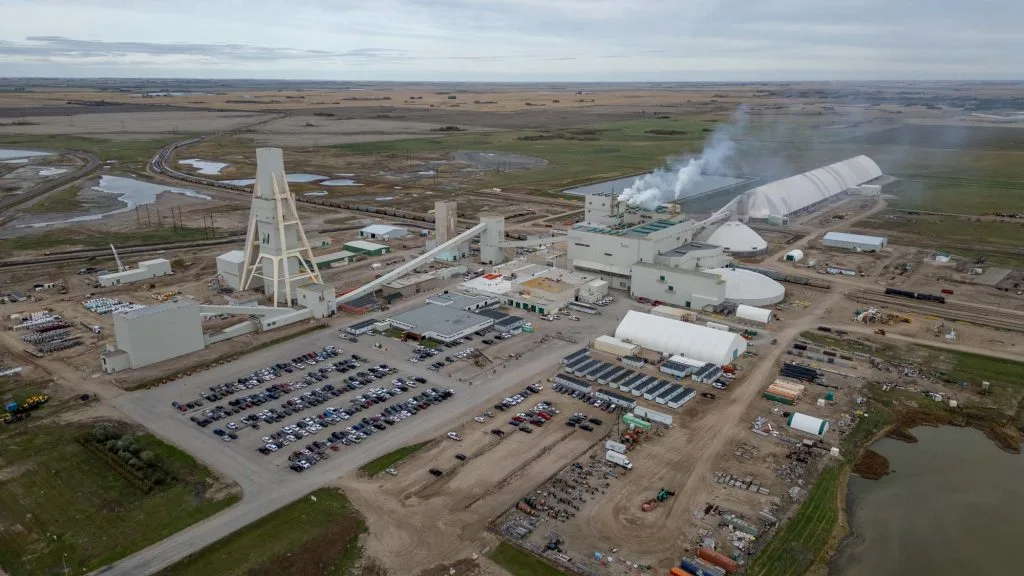
A visit to Nutrien's Allan potash mine, located 60 kilometers southwest of Saskatoon, provided me with a deeper understanding of the work being done here. Nutrien is the world's largest potash producer and the only Canadian company mining this mineral at six sites in Saskatchewan.
Potash, extracted from underground, is used as fertilizer to help crops grow better. My friend Aaron currently works at one of Nutrien’s mines, participating in remote-controlled automation features that enhance productivity and create a safer working environment.
When I descended into the potash mine, I had the opportunity to learn more about Aaron's daily life. We traveled a kilometer underground in an elevator known as “the cage.” Down there, everything was remarkably different! There were roads, vehicles, workstations, offices, and even Wi-Fi. It felt just like a small town!
Modern Mining Technology
Standing in front of the impressive mining face, I saw a gigantic drill cutting into the potash seam, creating uniform circular patterns. Not only did I witness the process firsthand, but I also had the chance to touch the raw potash ore. After extraction, the potash is brought to the surface and undergoes various processing stages.
A fun fact is that Nutrien's first shipment of potash, weighing 1,000 tons, left Patience Lake in 1959—65 years ago! Once processed, the potash is loaded into train cars and shipped worldwide to serve as fertilizer for crops in 40 countries. It was exhilarating to see the hardworking team here and to appreciate the value of Saskatchewan’s mineral resources.
Bringing Food to the Future
Nutrien's work is truly vital. I witnessed this on a fundamental level in daily life throughout Saskatchewan. On a global scale, Nutrien meets the needs of 600,000 farmers across three continents. These conversations and actions create a positive impact for the planet and future generations.
I feel an overwhelming sense of pride for Saskatchewan and Canada. Happy 65th anniversary, Nutrien!
```Phê Vé
Phê Vé is a leading online flight booking platform in Vietnam, providing accurate and up-to-date travel information. We are committed to delivering wonderful travel experiences with the best prices on the market.