
Phê Vé
May 15, 2026 • 4 min read
Discover the astronomical secrets and ancient heritage of Peru on an exciting journey from Cusco to Sacsayhuamán, going beyond just Machu Picchu.
Peru: A Crossroads of Nature and History
Each year, millions flock to the Andes plateau in Peru to marvel at Inca ruins and partake in vibrant festivals. Yet, few realize that this land holds countless intriguing stories waiting to be uncovered. If you have the chance, plan your visit during the solstice to explore this ancient territory, where every path is influenced by the celestial skies.
I remind myself to pause and breathe in the fresh air of Cusco, the Quechua capital of Peru, as I hurry over the cobblestone streets. I need to be at Calle Siete Culebras by 7:05 AM to witness the winter solstice event on June 21, a significant time for Peru's pre-Columbian architecture. Luckily, I arrive just in time.
Sunlight and Astronomical Legacies
The narrow, steep streets are still wet from a previous rain, and the sunlight on this solstice day shines through with absolute precision, bathing me in its glow. Thanks to a thoughtful design, these rays penetrate the central square of Cusco, creating an intersection on the summer solstice. Everything here is intentional.
I come to the Andes not merely to be captivated by Machu Picchu, which attracts over 2 million visitors each year, but to delve into the cosmic mysteries of this region's rich archaeological heritage. Before me stand colossal stones from pre-Inca civilizations, their odd shapes seemingly from another planet.
My guide, Andres Adasme, a Chilean astronomer who has lived in the Andes for two decades, promises to "uncover knowledge from the ancient stones" during our seven days together. We will stray from the typical tourist routes to gain fresh insights into the sophistication and mathematics of these ancient cultures.
Stories from the Past
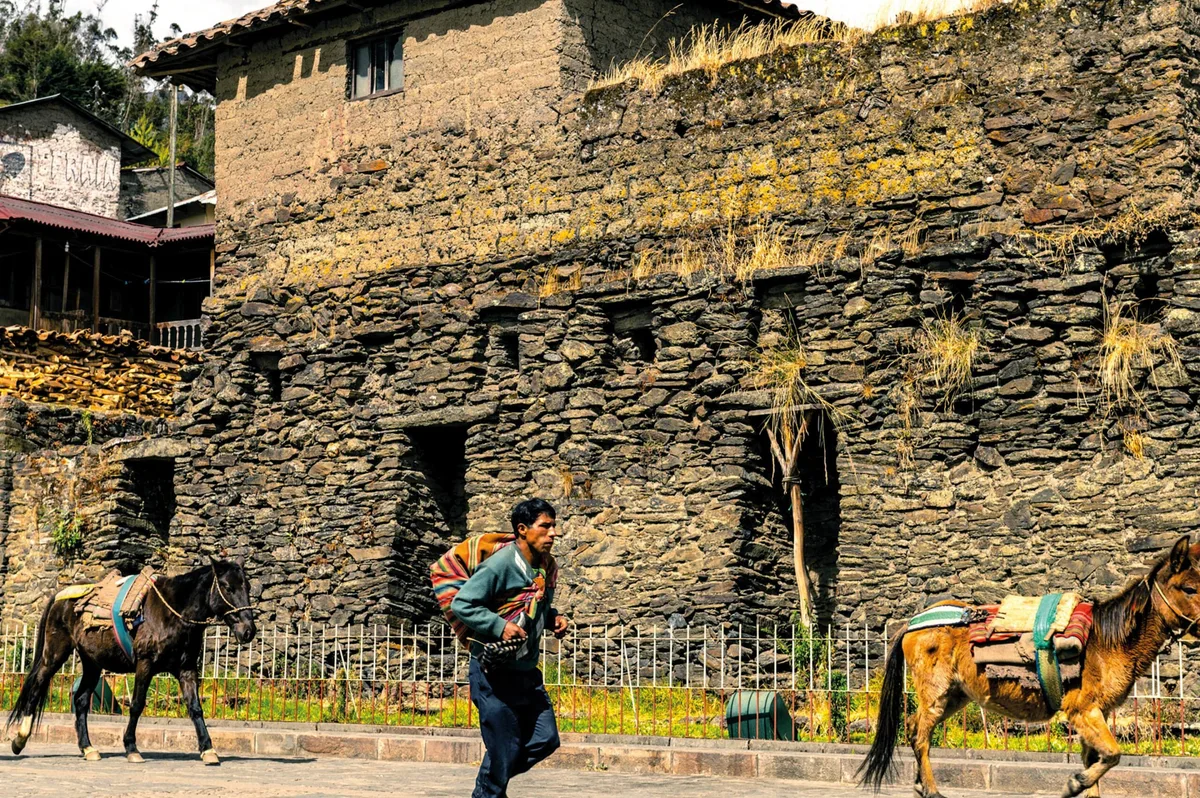
On our first morning, Andres and I navigate the ancient stone streets of Cusco. Here, I often hear that the city was founded by the Incas, who skillfully harnessed its heritage. Quechua women hold baby alpacas, posing for photos with tourists, while vendors sell colorful woven toys and scarves.
✈️ Tìm chuyến bay giá tốt
Đặt vé ngay với giá ưu đãi từ các hãng hàng không
However, Andres believes that Cusco's lineage extends far beyond the Inca era. We stop by the main square, filled with musicians and dancers preparing for the Inti Raymi festival - the grand festival of the sun. Here, we see a basilica from the mid-17th century built atop a huaca (temple) that was destroyed, once dedicated to the Andean creator god, Viracocha.
Exploring Ancient Heritage
We follow a pilgrimage route from northeast to southwest, aligned with the winter solstice axis. I learn that there were once six huacas along this axis, all destroyed to make way for churches. The church square intersects with the summer solstice axis, dividing Cusco into four corners of the Inca Empire.
Andres estimates that Cusco may have existed for over 12,000 years. To emphasize the city's intricate origins, we proceed along the summer solstice axis to a temple called Qoricancha, believed to have been once covered in gold. Along the way, we witness the finest Inca stonework in the city, with pillow-sized pink andesite blocks showcasing the craftsmanship of this era.
Exploring Sacsayhuamán
Our next stop is Sacsayhuamán. As we enter this area, Andres sighs at a sign that reads: 'Cultural and ideological heritage of the Inca civilization.' We pass through a natural cave and arrive at a circular plaza, once filled with water to reflect the movements of the sun and the Milky Way.
From above, the ancient streets of Cusco are said to resemble a puma with a snake running along its back. The heart of the puma is believed to be the intersection of the solstices, where the temple of Viracocha once stood. Andres explains that this design transcends three 'pachas' (worlds): Kay Pacha, the world of the living represented by the puma and the earth goddess Pachamama; Uku Pacha, the underworld guarded by the snake, the keeper of knowledge; and Hanan Pacha, the cosmic world above.
Andres believes that the symbol of the upper world, the condor, is represented by a watchtower in the main square of Cusco that has long been destroyed. However, the condor is also linked to a magnificent structure atop a hill above Cusco known as Sacsayhuamán, an astronomical marvel that makes Stonehenge look like a child's toy.
Unexplored Secrets
Indeed, Sacsayhuamán is our next destination. Andres points out remnants of this civilization that were ravaged by the Spanish for building materials in Cusco. No one knows for sure why these massive stones were used, but their specific purpose remains a mystery. "This knowledge was reserved for a select few: Amauta, or the wise. But it was lost forever as they fled from the Spanish, who could not comprehend the sophistication of Andean society," Andres concludes his tale.
Article referenced and edited from: Wanderlust Magazine
Phê Vé
Phê Vé is a leading online flight booking platform in Vietnam, providing accurate and up-to-date travel information. We are committed to delivering wonderful travel experiences with the best prices on the market.