
Phê Vé
April 2, 2026 • 4 min read
On that day, I felt a mix of excitement and nervousness as I approached the address in Kakinokizaka. For years, I had dreamed of participating in a traditional tea ceremony in Japan, and finally, that dream was coming true. I had never quite envisioned what it would be like; all I knew was that the
```html
A Serene Morning in Tokyo
On that day, I felt a mix of excitement and nervousness as I approached the address in Kakinokizaka. For years, I had dreamed of participating in a traditional tea ceremony in Japan, and finally, that dream was coming true. I had never quite envisioned what it would be like; all I knew was that the tea ceremony, or chanoyu, is steeped in strict rules and rich cultural significance.
I was aware that following etiquette is incredibly important in Japan. To be honest, I often feel anxious, and the preparation for the tea ceremony had me overthinking. I worried I might make a mistake and embarrass myself, especially in such a formal setting. But there was no turning back now; I took a deep breath, rang the doorbell, and waited.
The Tea Ceremony in Tokyo
There are numerous tea ceremony experiences you can partake in while in Tokyo, each one adding a special touch to your journey. Some noteworthy options include:
- A traditional tea ceremony in a private tea room.
- A combination of the tea ceremony and a Kaiseki lunch at a historic restaurant.
- A Cha-Kaiseki dinner with personalized cocktails at a special tea room in Tokyo.
- Bonsai creation and participation in a tea ceremony at the bonsai museum of master Kunio Kobayashi.
- Learning to make traditional sweets from a professor at Bifu School.
- The Sencha tea ceremony.
The Purpose of the Tea Ceremony in Japan
For Westerners, enjoying tea is often just a social experience. Like afternoon tea in England, it’s a time to gather and relax with friends. However, the tea ceremony in Japan is entirely different. Its purpose extends beyond simply enjoying tea; it encourages presence and mindfulness.
Deeply influenced by Zen Buddhism, the tea ceremony invites both host and guests to pause amidst the whirlwind of daily life and fully immerse themselves in the present moment. Every gesture during the ceremony is intentional, not meant to impress, but to focus on the smallest details. In a world that often rushes us along, the tea ceremony creates a rare space where nothing is hurried or overlooked.
✈️ Tìm chuyến bay giá tốt
Đặt vé ngay với giá ưu đãi từ các hãng hàng không
My Experience at To-Ri-An
I attended the tea ceremony at To-Ri-An, an Urasenke school nestled in a residential area of Meguro, Tokyo. Urasenke is the largest of the three tea ceremony schools in Japan. The school is run by a couple, Souei Funakoshi and Souai Kawada, both of whom are instructors there.
Although I expected there to be an interpreter, both professors spoke excellent English. Souei-san greeted me at the door, and after removing my shoes, I was led into the tea room, where Souai-san had arranged for me to sit in front of the tokonoma (decorative alcove). Souai-san explained that the tokonoma—where kakemono (hanging scrolls) and chabana (simple flower arrangements) are displayed—is the heart of the room.
The Detail in Every Gesture
In the tea ceremony, the influence of the seasons is incredibly important. The scroll on the wall is specially chosen for the occasion, often reflecting the season and conveying the philosophical ideas the host wishes to share. During my visit, the scroll depicted the famous Taoist story "The Lost Horse," reminding us to accept the world as it is.
As the ceremony began, Souai-san guided me on how to sit and the rules of etiquette. I struggled to maintain the seiza position—sitting on my heels with my feet tucked beneath me—but I wanted to impress the hosts. I had heard that Urasenke allows sitting on chairs, but I decided to challenge myself a bit.
As soon as Souei-san entered with a plate of wagashi—a type of traditional sweet—the ceremony officially began. I had enjoyed matcha and wagashi in many Japanese gardens, but no one had ever told me that I should eat the wagashi before drinking the tea. In fact, the bitterness of matcha can be quite strong, and the wagashi helps to soften that bitterness.
The Atmosphere of the Tea Ceremony
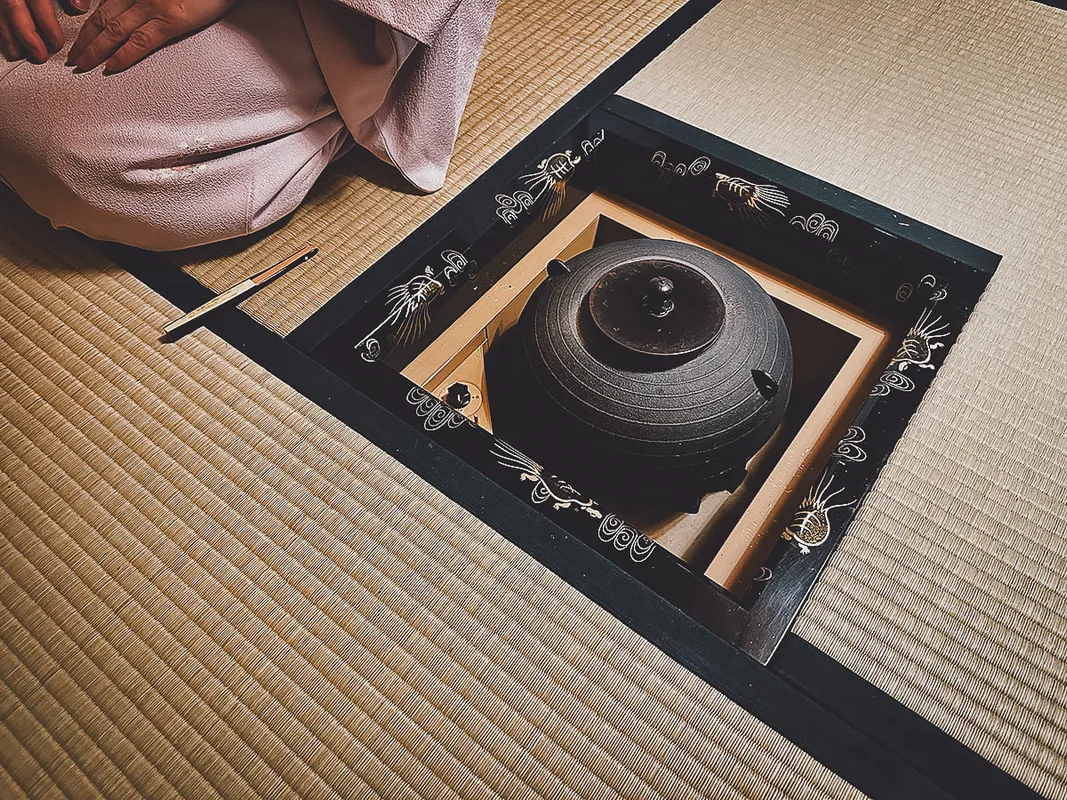
From the moment Souei-san entered, you could feel the distinct difference from Western tea culture. There wasn’t much conversation; everything unfolded in silence, punctuated only by the sounds of movements and the process itself. This was intentional; without distracting chatter, your attention shifts to how Souei-san cleans the utensils, the sound of boiling water in the kettle, and each precise movement.
Every action is performed with exactness; nothing is spontaneous—even the way the cloth is folded or the angle at which the spoon is held. The meticulousness of each gesture, combined with an understanding of customs and attention to detail, is why mastering the art of the tea ceremony often takes decades of practice.
```Phê Vé
Phê Vé is a leading online flight booking platform in Vietnam, providing accurate and up-to-date travel information. We are committed to delivering wonderful travel experiences with the best prices on the market.